My Speedcubing Journey
My introduction to speedcubing didn’t start with a normal Rubik’s Cube.
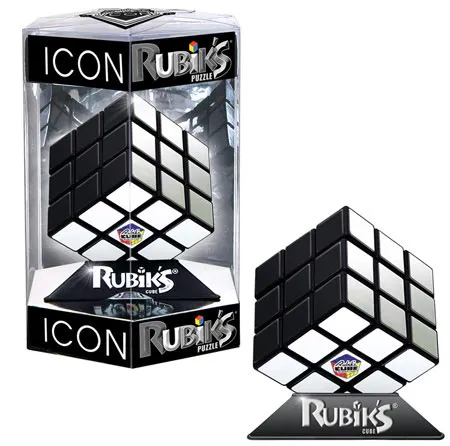
When I was in elementary school, my grandmother bought me a cube that looked almost normal, but not quite. Instead of the standard bright colors, it had strange shades of gray, with a black side, a silver side, and a white side. It looked something like this. Mechanically, it was a regular 3×3, but visually it was much harder to understand. I wanted to solve it, so I did what any curious kid would do: I went online and tried to follow tutorials.
I couldn’t solve it.
At the time, I didn’t know whether it was an issue with the cube or just my inexperience, but something wasn’t clicking. Eventually, I got a standard Rubik’s Cube with the familiar red, blue, green, yellow, orange, and white. With that cube, the tutorials suddenly made sense and once I learned how to solve a normal cube, I could finally solve the original one too.
That moment flipped a switch.
Solving the cube wasn’t enough anymore. I wanted to get faster. I started learning better methods, memorizing algorithms, and experimenting with the cube itself. At one point, I even took a cube apart and tried lubricating it with Vaseline. It was a fun and educational experiment, but ultimately destructive. But it pulled me deeper into the idea that cubing wasn’t just about solving; it was about efficiency and improvement.
Before long, I was collecting more puzzles: 2x2s, 4x4s, 5x5s, all the way up to 7x7, along with non-cubic puzzles such as the Megaminx and Pyraminx. I watched hours of YouTube videos, constantly fiddled with the cube, and slowly chipped away at my solve times.
In the summer of 2013, my family had a vacation planned to the Grand Canyon and Las Vegas. When I discovered that the Rubik’s Cube World Championship was happening in Las Vegas at the same time, I convinced them to let us stay an extra day so I could attend. I didn’t compete, just spectated, but it was incredible. I got to see Feliks Zemdegs, one of the greatest cubers of all time, win his first of two world championships. Watching someone operate at that level in person was surreal. It was one thing to see fast solves on YouTube, but witnessing the speed and precision live made it feel real in a way that videos never could.
Later that summer, my dad took me to my first competition where I actually competed, in Indiana. It was a long road trip that ended up being a turning point. Until then, cubing had mostly been a solo activity and something I associated with online videos. Meeting other cubers in person was different. Everyone instantly spoke the same language, shared the same obsession, and understood the same tiny details that most people would never notice. It was one of the first times I experienced how powerful a shared niche interest could be.
Since then, my relationship with speedcubing has come in waves. Some years I practice seriously, pushing for improvement and learning new techniques. Other times, I step away and just enjoy solving casually. But cubing has never fully left my life.
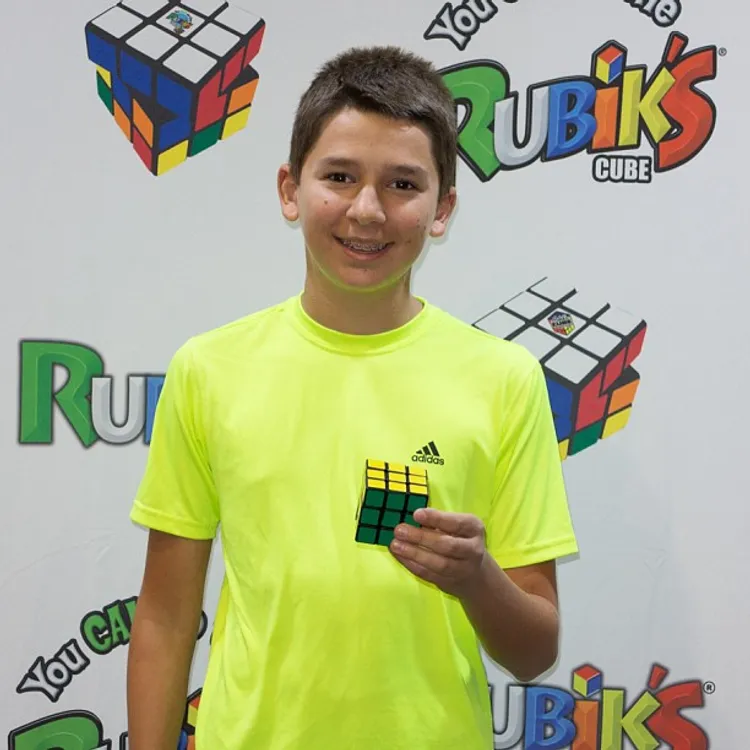
Today, I average around 12 seconds on the 3x3. My long-term goal is simple and specific: to achieve a sub-10-second average of five in official competition. Whether I reach it or not, speedcubing has shaped how I think about practice, progress, and mastery.
Coming back to speedcubing as an adult has felt fundamentally different than learning it as a kid. Back then, progress was mostly accidental. I watched tutorials, memorized algorithms, solved the cube over and over, and slowly got faster without thinking too much about why. Improvement happened, but it wasn’t intentional. I didn’t analyze my weaknesses or structure my practice—I just solved.
Now, with a fully formed brain and an analytical mindset, speedcubing feels less like a toy and more like a system. I’m far more deliberate about what I practice, where I’m losing time, and which skills actually move the needle. Instead of casually solving, I can break solves down into stages, identify inefficiencies, and work on specific problems with purpose. Progress is slower than it was as a kid, but it’s deeper, more controlled, and more satisfying.
In that way, the Rubik’s Cube has become a quiet reminder of how learning itself changes over time. Natural curiosity eventually gives way to intentional effort, and raw repetition turns into thoughtful refinement. Speedcubing now isn’t just about chasing faster times—it’s about understanding how improvement really works, and applying that mindset well beyond the cube.